Knowledge
Show examples of how trigonometry, matrices, vectors, applied mechanics and basic algebra are used within your industry.
Skills
Create a project as an example to show how you used maths to manipulate computer generated geometry, recreate physical systems and how you would use maths to describe problems and solutions. You can use an old or current project as your example.
Knowledge
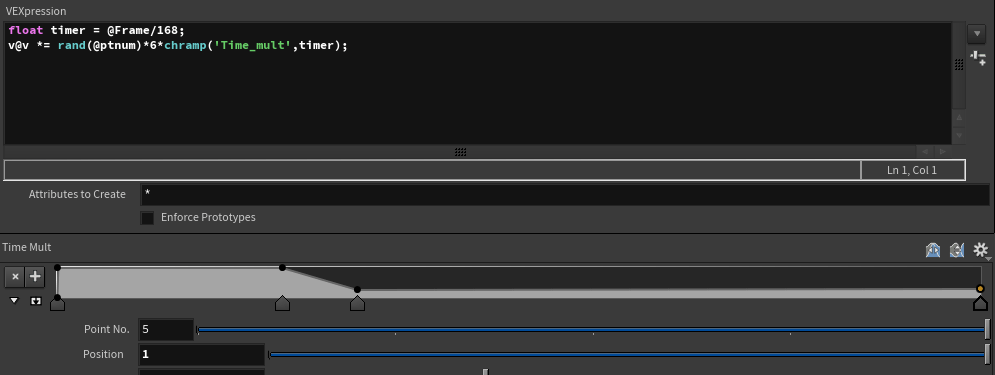
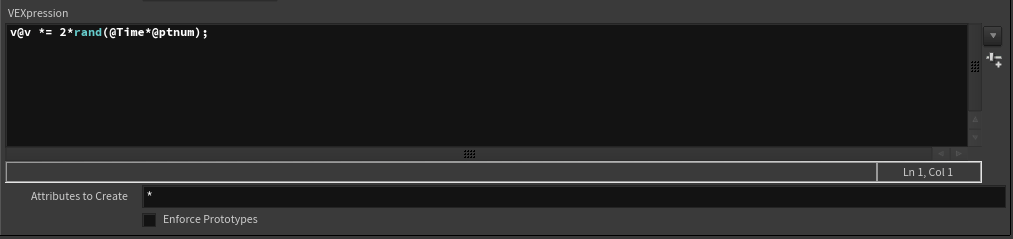
Trigonometry is used in the industry to animate direction or for simulating direction. An example of this is using the expression “abs(sin(time2)cos(time2))5+time*6″ to animate the motion of a jellyfish as I did previously as discussed on my Software Design page. Vectors are used extensively in Houdini, especially when controlling the motion of effects you control this through x,y and z. Often plugging colour into the sim to see the affect of direction can be useful as a visual aid and you would use the vectors R, G and B. You use applied mechanics in Houdini to simulate how forces such as wind and gravity would affect water or pyro simulations. I have spoken about this in depth on my VFX craft page where I have manipulated vectors and combined them with particle networks to create a portal. I had three stages of my setup, two of which manipulating vectors to animate noise in two different ways. In one instance I created a ramp and in the other multiplied them randomly by time and pointnumber.
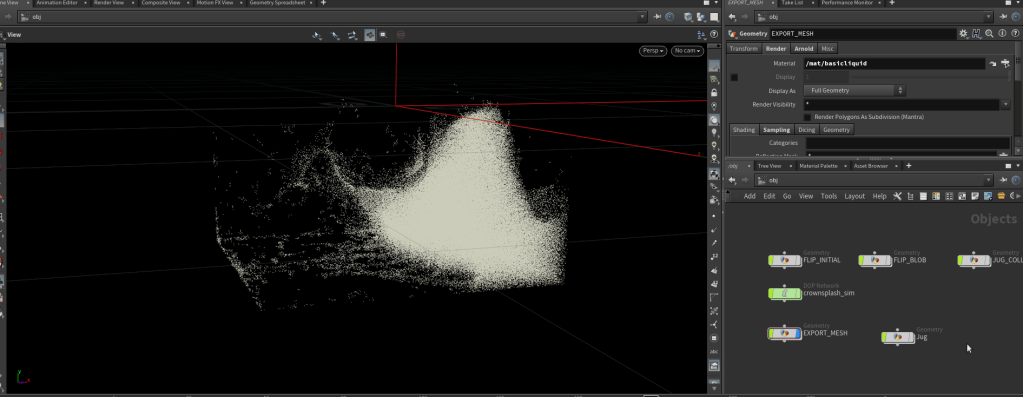
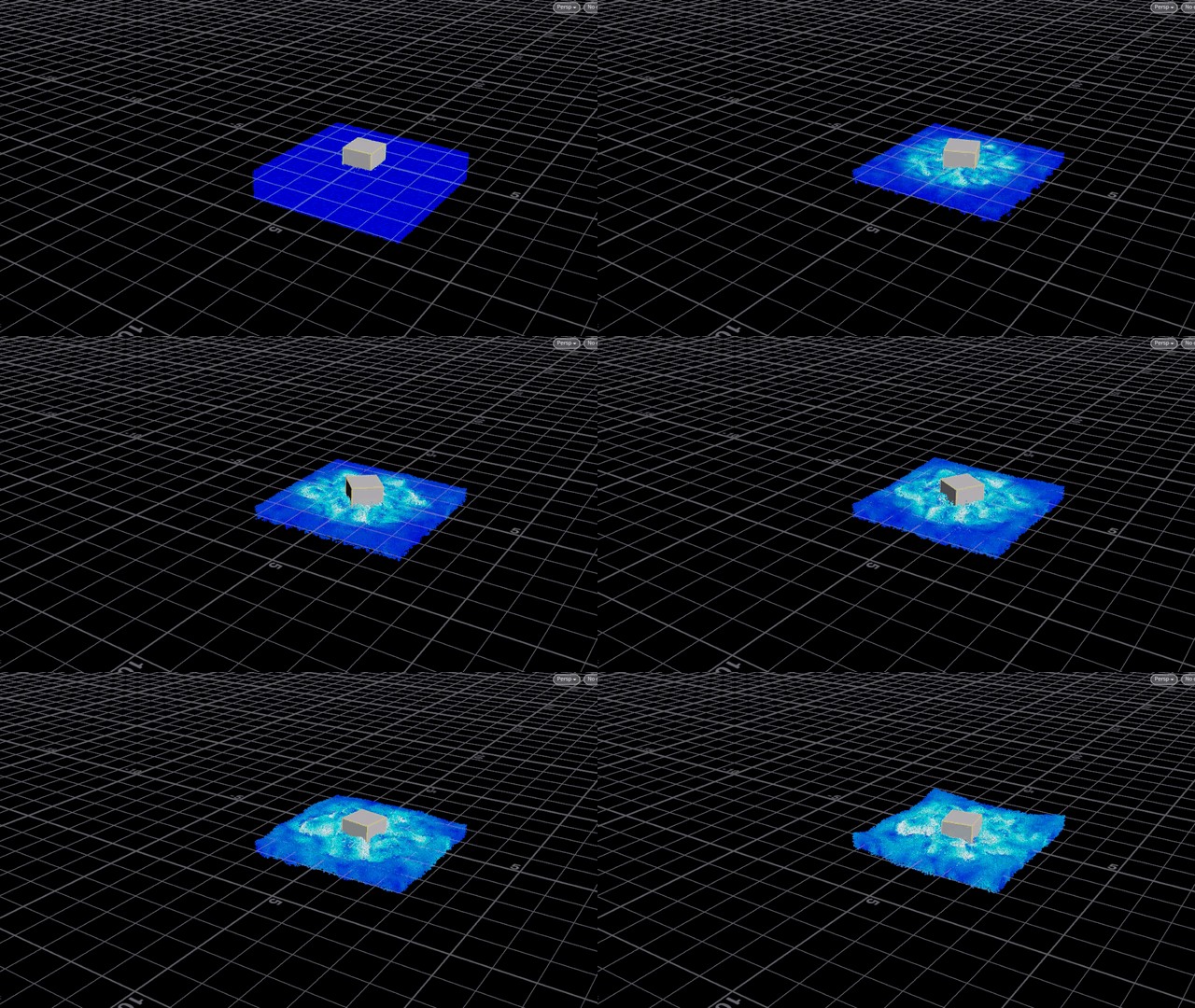
I often use applied mechanics in my FX work too. While creating a milk simulation I had the chance to experiment with flip tank capabilities in Houdini. I added in rigid body objects such as boxes to see the effect the simulation of water I had setup would interact with it. The force of the water was changed to understand how much if was effecting the rigid objects. I went for a swirly kernel velocity transfer to attempt to spin the box in the water. I placed the box in the center and used the ‘$F’ expression to add some subtle spin to the box also for a more interesting effect.
Skills
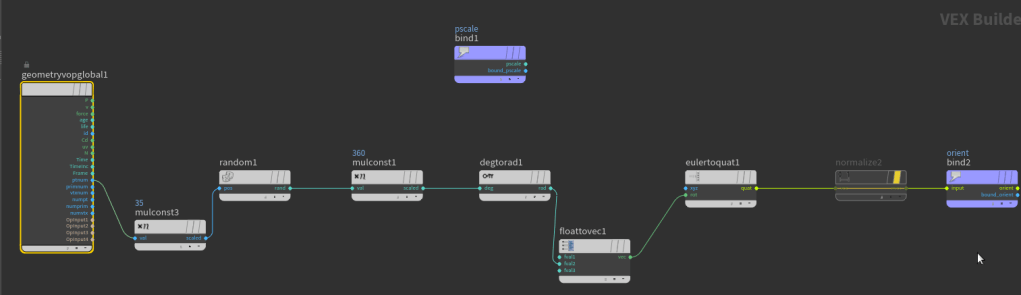
As previously discussed on other pages for R & D I was asked to create a procedural growing tree in Houdini. I used maths in order to first find the orientation and then use the orientation to randomise the branches spawn points. This was an issue I was stuck on for a while. I knew how to orientate with a transform node in 3D space but to procedurally create the same thing was a challenge.
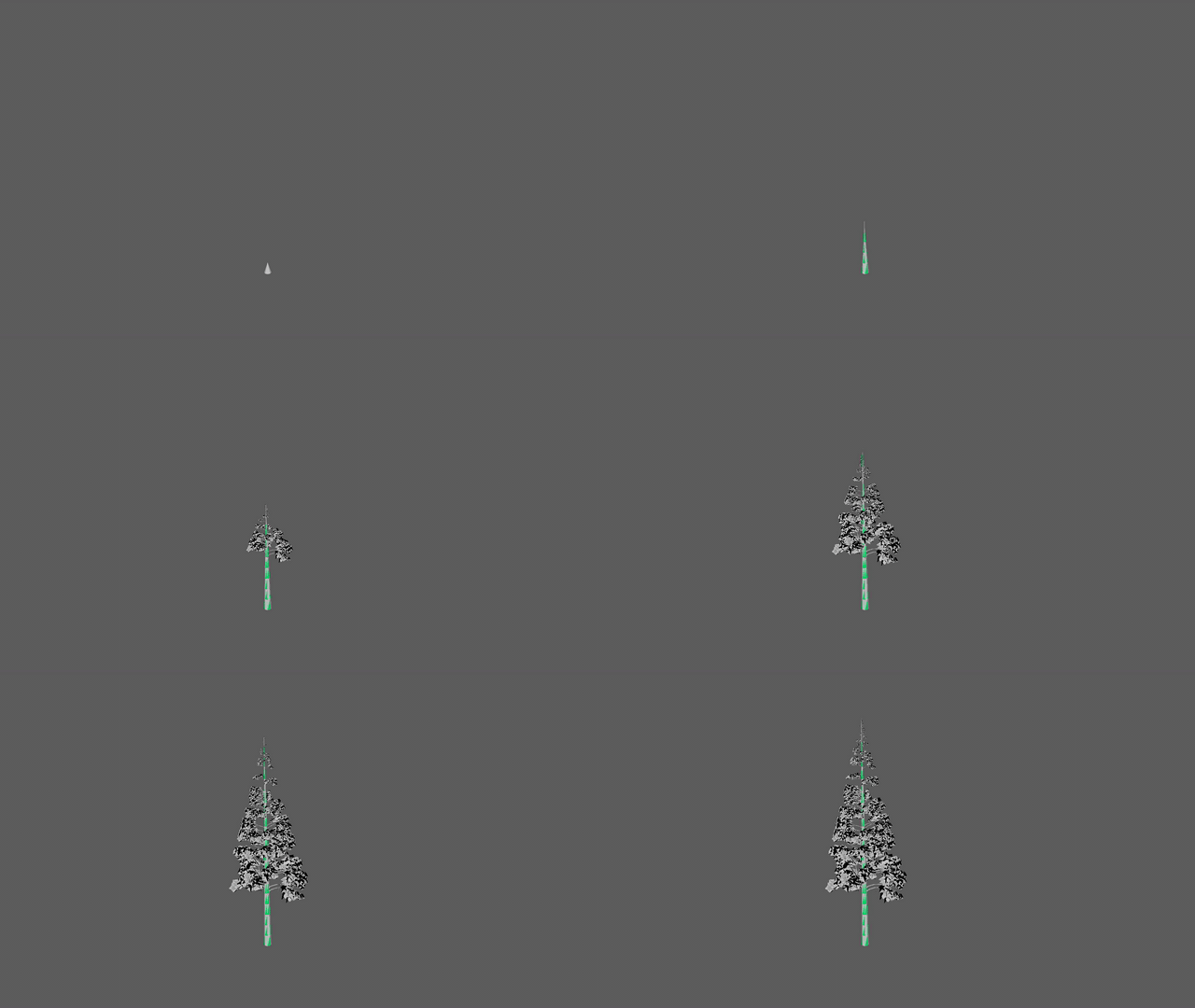
When creating this I learnt about rotation matrixes on a basic level and therefore matrices. This was an especially steep learning curve as I first created the solution in vex which i found through research but I wasn’t satisfied because I felt I didn’t actually understand the maths of what I had done. I then attempted to recreate my vex solution in a VOP which is like vex in node form. This broken down visual version of vex made it slightly easier to understand the variables in which I had to summon and then manipulate. This took time and helpful nudges from colleagues but I ultimately prevailed. I plan on learning more about them as I use them more often.
In my most recent job I had to create saliva for a dog, similar to my Komodo Dragon Project. I did some early testing of the a similar solution to my Komodo saliva project, primarily with the round the mouth saliva. The Houdini version was older on the Komodo Project as I was more comfortable with it. A key node in my solution was the then known paint node, this was changed to attribute paint. This node worked differently and requited some after the fact fine tuning of the pscale to get the end result you want.
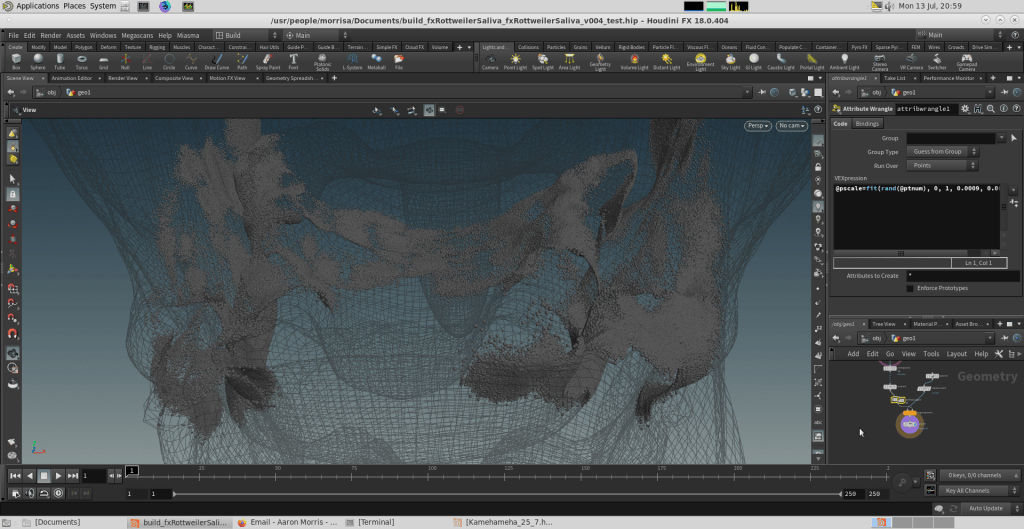
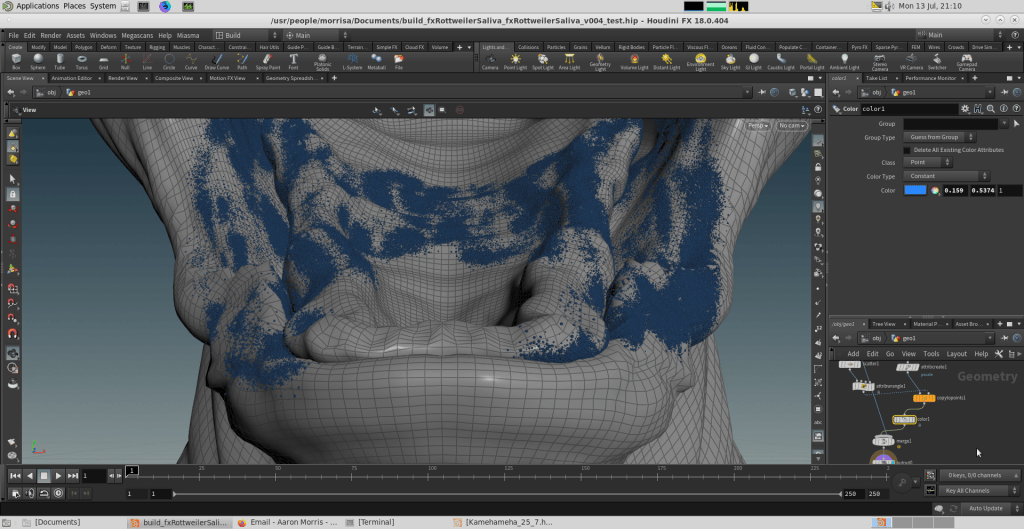
Whereas last time the result needed to be a combined layer of saliva, this time I needed individual beads across the mouth of varying sizes. After applying the attribute paint and painting on where i would like the FX to take place I use a scatter node to add the points. I made the scatter quite dense to replicate the effect of bubbly foamy saliva. Then for the tuning I used some basic algebraic math in the form a fit solution. I ran the pscale or point scale through the fit, randomising based on point number. This randomises the pscale of he ‘bubbles’ scaling them against each other through the fit range. I then tuned the range to several decimal places to find what is necessary visually.


